
Arthrosamid vs Steroid Injection for Knee Pain – Which One Lasts?
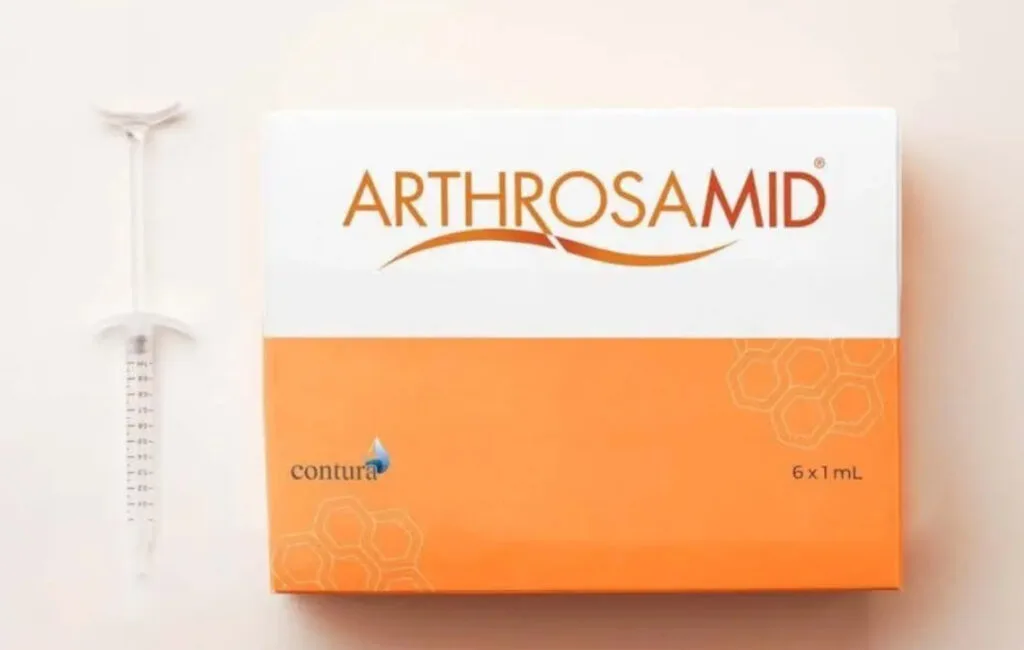
A steroid (cortisone) injection settles knee osteoarthritis inflammation quickly but can wear off after a few months (sometimes after only 6 weeks).
Arthrosamid is a single hydrogel injection that integrates into the joint lining and is shown in published trials to relieve pain for up to three years, sometimes even longer.
Steroid suits fast, short-term flare relief; Arthrosamid suits longer-lasting relief when steroid is no longer holding.
If you've had a series of cortisone injections for an arthritic knee and found the relief faded faster each time, you may be weighing it up against Arthrosamid.
They're both injections, but they work in fundamentally quite different ways and sit at different points in your treatment.
This guide compares the two on how they work, how long they last, side effects, cost and suitability, so you can have an informed conversation with your clinician.
Key takeaways
- Different jobs. Steroid calms inflammation fast for shorter-term relief; Arthrosamid integrates into the joint lining for long-term relief from a single injection.
- Duration is the headline difference. Steroid relief lasts around six weeks to a few months; published Arthrosamid trials show benefit sustained for up to three years.
- Steroid is a drug; Arthrosamid is a device. Cortisone has a systemic (whole-body) effect, so it isn't right for everyone; Arthrosamid is inert and stays exactly where it's placed.
- It's not a case of either/or. Many people have steroid first and move to Arthrosamid once shorter-acting injections stop helping but surgery still feels premature.
- Cost reflects duration. Arthrosamid costs more upfront privately but is a one-off injection intended to last years. See our pricing page for current all-inclusive figures.
How does a steroid injection work in the knee?
A steroid, or cortisone injection, delivers corticosteroid into the joint to settle inflammation. It is a fast-acting and often used first-line, particularly for an inflammatory flare-up.
We have some corticosteroids that naturally occur in the human body; man-made (synthesised) steroids act like these natural steroids to reduce pain and inflammation.
These are not the same as (anabolic) steroids used by bodybuilders to increase muscle size.
Steroids that are used for joint injections take around a week to work but can last for several months after treatment.
Cortisone works by broadly suppressing the inflammation that drives pain in an osteoarthritic knee. Because it acts within the joint fluid, the effect is felt quickly, but the medicine is gradually cleared by the body and the benefit fades.
Steroid is a drug, so it has a systemic (whole-body) effect, which means it isn't the right choice for everyone. However, it remains a useful, well-established tool for rapid, short-term relief.
Main points on steroid injections:
- Very effective, quick acting painkiller.
- Can provide rapid and sometimes dramatic pain relief.
- Creates a window of opportunity for rehabilitation and physiotherapy.
- Can help patients improve their quality of life for important events or activities, such as a sports competition, holidays, weddings or skiing trips.
- An excellent option for people with severe inflammation who are struggling with everyday activities, such as walking to the shops.
- Has a very minimal systemic effect.
- Steroid injections still have an important role as a treatment option in the right patients.
- Available on the NHS or very affordable privately.
You can read more about how we use it on our steroid injection page.
How does Arthrosamid work, and why does it last longer?
Arthrosamid is a 2.5% polyacrylamide hydrogel – a CE-marked medical device, not a drug – given as a single injection under ultrasound guidance. Rather than sitting in the joint fluid and wearing off, it integrates into the joint lining and stays there.
The difference comes down to where the gel ends up. Rather than being cleared by the body like steroid, the hydrogel settles against the synovium, the joint's lining, and your own tissue gradually grows through it, restoring a healthier lining that regulates fluid and inflammation.
That repair takes weeks to mature, which is why Arthrosamid doesn't give the instant hit steroid does, but it's also why a single injection keeps working long after a steroid injection would have worn off.
Main points on Arthrosamid injections:
- A single Arthrosamid injection may provide meaningful improvement in knee osteoarthritis symptoms for up to three years in some patients.
- Improves pain, stiffness and function – studies have reported improvements in everyday symptoms, mobility and physical function.
- The injection is performed as an outpatient procedure, avoiding the recovery associated with surgery.
- Arthrosamid can provide another treatment option before considering procedures such as knee replacement surgery.
- Arthrosamid is a non-degradable hydrogel that integrates with the synovial tissue within the knee rather than acting as a short-term anti-inflammatory medication.
- It does not contain corticosteroid, which can be particularly relevant when considering repeated injections or longer-term management.
- Clinical studies, including longer-term follow-up, have reported a favourable safety profile, with sustained benefits demonstrated in patients followed for several years.
Our pillar guide on Arthrosamid for knee osteoarthritis explains the full mechanism.
Arthrosamid vs steroid: a side-by-side comparison
Steroid is fast but can be short-lived; Arthrosamid is slower to take effect but far more durable.
| Feature | Steroid (cortisone) | Arthrosamid |
|---|---|---|
| What it is | A corticosteroid drug | A polyacrylamide hydrogel (medical device) |
| How it works | Suppresses inflammation in the joint fluid and lining. Very effective, quick acting painkiller. Creates a window of opportunity for rehab and physiotherapy. | Integrates into the joint lining (synovium) |
| Onset | Fast (days) | Builds up over weeks 2–12 |
| Typical duration | Results vary considerably from person to person. Effects can last from months to years. Duration depends on the specific condition being treated. | Up to 3 years in published trials |
| Body-wide effect | Yes, although minimal | No – stays where it's placed |
| Number of injections | Can be repeated periodically | One-off (repeatable after years if needed) |
| NHS availability | Available on the NHS. Also affordable privately. | Private only in the UK |
For current private fees, including single knee and both-knees options, see our pricing page.
You can also watch our podcast comparing all joint injection options here:
Knee Osteoarthritis: Comparing Steroid, PRP, Hyaluronic Acid & Arthrosamid Treatments (video above).
How long does each injection last?
This is often the deciding factor.
With a steroid injection results vary considerably from person to person – effects can last from around six weeks to a number of years.
Published Arthrosamid trials show pain relief from a single injection sustained for up to three years.
With Arthrosamid, most people begin to notice benefits between weeks 2 and 12 – often from around four to six weeks in our clinicians' experience – and the effect then tends to hold rather than fade.
A 12-month study reported around 62% of patients were classed as treatment responders. This study looked at how well Arthrosamid (iPAAG) worked over 12 months in people with knee osteoarthritis.
The results showed that a single injection continued to provide meaningful improvements in knee pain, stiffness and everyday function one year after treatment, with few treatment-related side effects reported.
A longer-term follow-up study found that the benefits of a single Arthrosamid (iPAAG) injection could be sustained for up to three years.
Patients continued to report meaningful improvements in knee pain and symptoms at three years, with no adverse events during the extended follow-up considered related to the injection, providing encouraging evidence for its longer-term effectiveness and safety.
If you've reached the point where each steroid injection seems to help for a shorter time than the last, that pattern of diminishing returns is often the signal that a longer-acting option is worth discussing.
What about side effects and safety?
Both injections are generally well tolerated, but their risk profiles differ.
Because steroid is a drug with systemic effects, it isn't ideal for everyone. Arthrosamid is inert and stays in the joint.
Unlike steroid, Arthrosamid has no systemic effect, but it isn't side-effect-free.
In the trial that compared it against hyaluronic acid, about 29% of patients had a device-related effect, nearly all mild or moderate (injection-site swelling, soreness or bruising), with no serious device-related events recorded.
Roughly one in three to one in four people get a short post-injection flare that settles within a few days with rest and simple painkillers.
The main rare risk, as with any joint injection, is infection, which is why you take a prophylactic antibiotic beforehand and the skin is prepared to a surgical standard. Your clinician will talk through how the risks of each option apply to you.
How much does each cost?
Steroid injections are widely available, including on the NHS, and are relatively low-cost privately. Arthrosamid is only available privately in the UK.
The higher upfront cost of Arthrosamid is best weighed against its duration: it's a one-off treatment intended to last years, so it's worth comparing it to the cost of repeated shorter-acting injections over the same period.
For live all-inclusive pricing, visit our Arthrosamid pricing page.
Which injection is right for you?
Steroid tends to suit fast, short-term relief – settling an acute flare or getting you through a specific period.
Arthrosamid tends to suit people who want longer-lasting relief, particularly once steroid or other shorter-acting injections are no longer holding, but who aren't ready or suitable for a knee replacement.
It's not a strict either/or. In practice many people have steroid earlier in their journey and move to Arthrosamid later.
The right choice depends on your stage of osteoarthritis, your goals, your general health, and what you've already tried – which is exactly what an assessment is for.
Our specialist clinicians can review your imaging and history and help you decide.
Frequently asked questions
Is Arthrosamid better than a steroid injection?
It isn't "better" so much as different.
Steroid is fast-acting and excellent for short-term flare relief; Arthrosamid lasts far longer (up to three years in published trials) but takes weeks to become effective and costs more. The best option depends on your knee, your stage of osteoarthritis and what you've already tried.
Can I have Arthrosamid if steroid injections have stopped working?
Often, yes – that's one of the most common reasons people consider it.
When shorter-acting injections help for less time with each round, a longer-lasting option like Arthrosamid is frequently worth discussing, provided your knee is suitable on assessment. See Am I Suitable for Arthrosamid®?
Why does a steroid injection wear off so quickly?
Cortisone acts within the joint fluid and is gradually cleared by the body, so its anti-inflammatory effect fades – typically after around six weeks.
Arthrosamid lasts longer because it integrates into the joint lining rather than being absorbed.
Is a steroid injection available on the NHS and Arthrosamid not?
Steroid injections are readily available on the NHS.
Arthrosamid is not routinely funded by the NHS and is generally accessed privately in the UK.
Not sure which injection your knee requires?
The best way to decide is a face-to-face assessment – a look at your knee, a review of any imaging, and a plan built around your goals.
Our specialist clinicians were among the first in the UK to offer Arthrosamid and can talk you through every option, including steroid.
Learn about our Arthrosamid service → | Book an assessment | Call 020 7482 3875
Sources & references
- Bliddal, H., Beier, J., Hartkopp, A., Conaghan, P.G. and Henriksen, M., 2024. Polyacrylamide gel versus hyaluronic acid for the treatment of knee osteoarthritis: a randomised controlled study. Clin Exp Rheumatol, 42(9), pp.1729-1735.
- Bliddal, H., Beier, J., Hartkopp, A., Conaghan, P.G. and Henriksen, M., 2024. Effectiveness and safety of polyacrylamide hydrogel injection for knee osteoarthritis: results from a 12-month follow up of an open-label study. Journal of orthopaedic surgery and research, 19(1), p.274.
- Bliddal, Henning et al. "Three-year follow-up from a randomised controlled trial of a single intra-articular polyacrylamide hydrogel injection in subjects with knee osteoarthritis." Clinical and experimental rheumatology vol. 44,5 (2026): 996-1003.
- NHS – Osteoarthritis
This article is for general information and isn't a substitute for individual medical advice. Whether Arthrosamid or a steroid injection is suitable for you depends on an assessment of your knee.
Last updated: 10 September 2026